

Carmel teaches
the Church how to pray.
-Pope Francis & Pope Benedict XVI

The Thirty-first Week
in Ordinary Time
November 1: The Solemnity of All Saints
November 2: The Commemoration of
All the Faithful Departed
Click here for our newest hymns,
“Morning and Evening Song” and the instrumental and vocal versions
of “Para Amar Como Tú”
We offer Night Prayer
every night of the year.
The Commemoration
of All the
Faithful Departed
November 2, 2026
Night Prayer
for the
Thirty-first Week
in Ordinary Time


“Meet your
Beloved
every day:
same time,
same place.”
Sister Albertina’s
Golden Rule
for Prayer:
Choose a time
and place
each day to pray:
Elige un momento y un lugar para rezar cada día:
New Hymns!
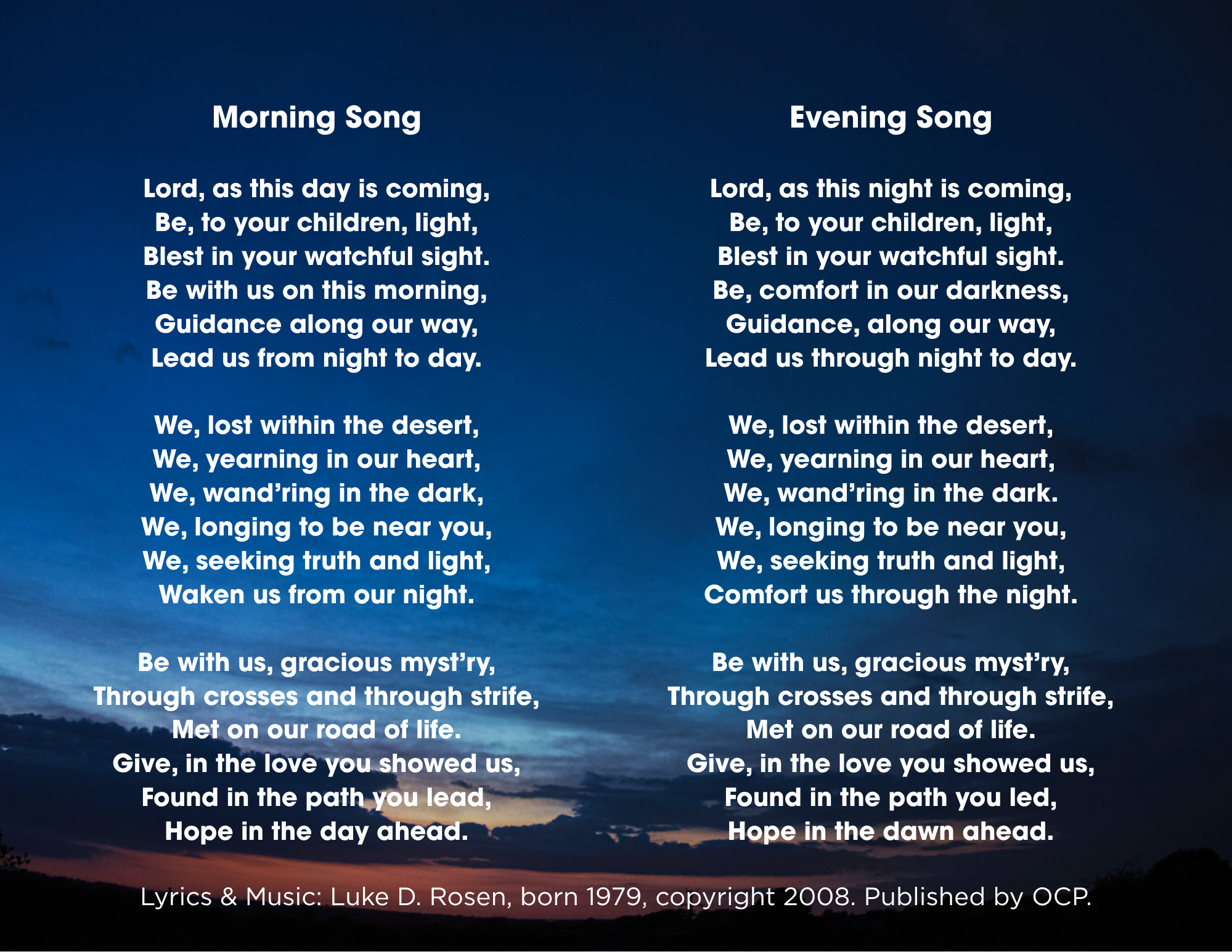
Vocals: Alondra Catache and
Matthew Gummess, O.Carm.
Piano: Benjamín Aguilar, O.Carm.
Viola: Briana Bandy.
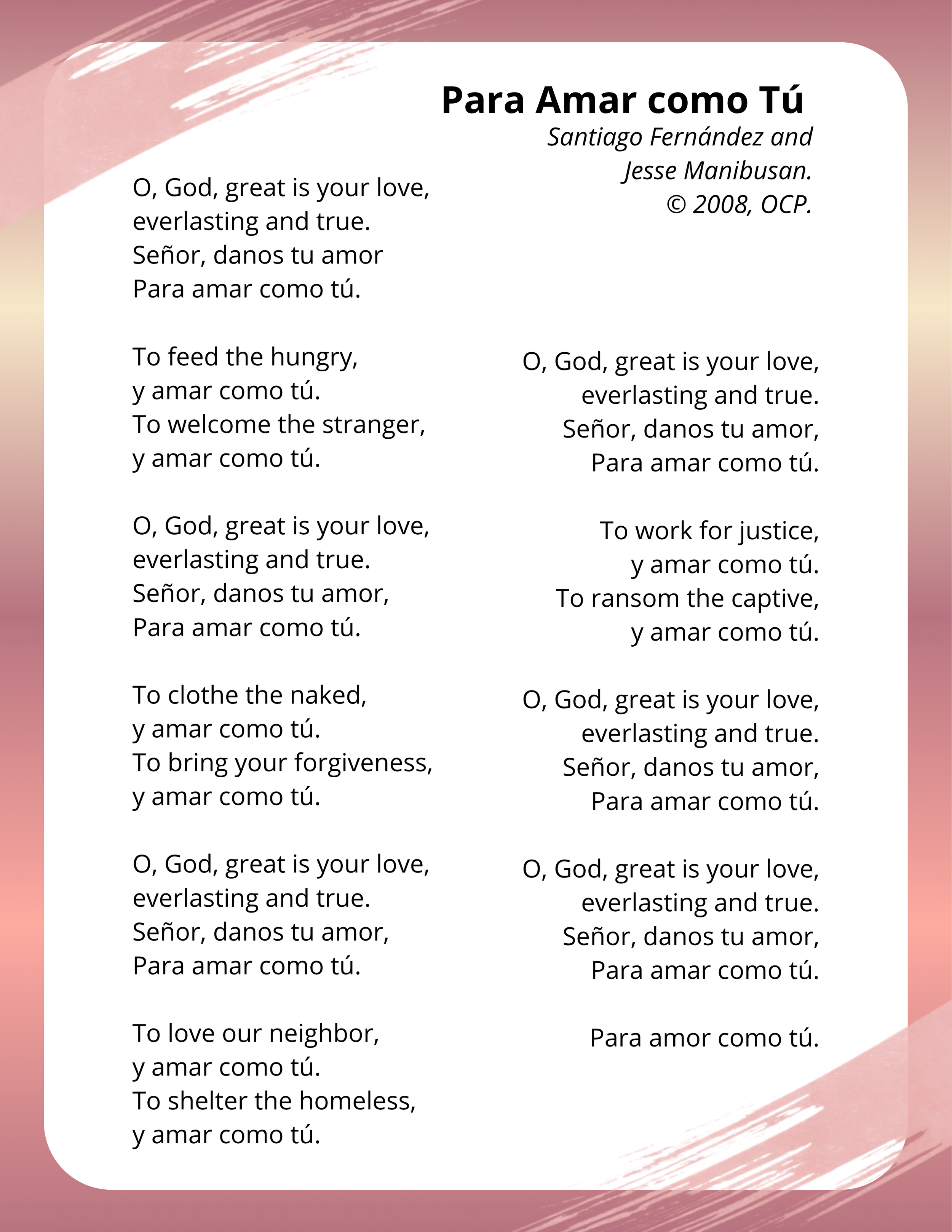
Vocals: Hector Tavárez, O.Carm., Marco Pardo, TOC, Raúl Chafloque, O.Carm.,
Benjamín Aguilar, O.Carm., Alondra Catache.
Piano: Benjamín Aguilar, O.Carm.
Guitar & Bass: Julian Pardo.
Soprano Sax: Jeff Delisanti.
Viola: Briana Bandy
Prayer Intention
of Pope Leo
for November 2026
For the proper use of wealth
Let us pray for the proper use of wealth, that, not succumbing to the temptation of selfishness, it may always be put at the service of the common good and solidarity of those who have less.
The Rosary
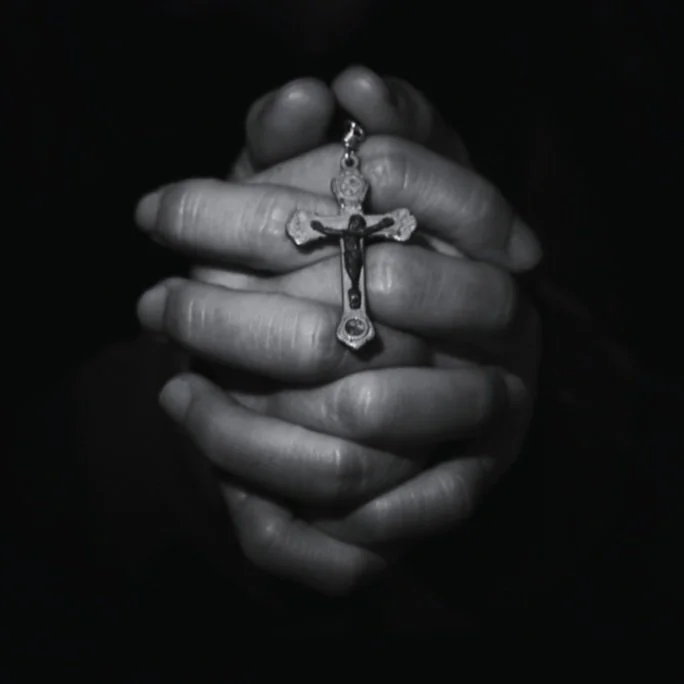
Pray the Rosary
in English and Spanish
with the Carmelites here
or on SoundCloud.
Rece el Rosario
en inglés y español
con los Carmelitas aquí
o en SoundCloud.
Iconography:
“Windows into Heaven”
Praying with Spiritual Icons is an ancient practice still used by Eastern Rite Catholics and the Orthodox Church today. Icons present holy images and symbols that invite us to a still, contemplative space, deepening our connection with God. The Icons in our videos are intended to enhance the experience of praying the specific liturgy.
Icons are intentionally painted without realistic perspective or natural shadows. This stylistic choice is meant to pull the viewer out of ordinary, earthly time and invite them into the eternal presence of God.
Many of the Icons we use are written by Carmelite friars. The icons we share will change throughout the Church's liturgical seasons. We will do our best to briefly explain the symbols found in these icons and list resources for users who wish to learn more about the tradition of this sacred art form.
If praying with Icons interests you, here is a link to a guide that might be helpful. We also offer a simple format for Visio Divina on our Meditation Tools page.
Additional Reading
”Behold the Beauty of the Lord: Praying with Icons “
by Henri JM Nouwen
”Praying with Icons “
by Jim Forrest
”The Open Door “
by Frederica Mathewes-Green

“The Nativity”
Written by
Filiberto Oregel, O. Carm.

“Christ the Pantocrator”
Written by
Daryl Moresco, O. Carm.

“Christ of the Gospels”
Written by
Filiberto Oregel, O. Carm.

“Certainly, I find that the starting point for prayer
has to be a brief moment
of self-awareness:
an acknowledgment of how
I find myself right then —
peaceful…
troubled…
restless…
joyous…
preoccupied…
angry…
questioning…
Whatever the mood,
this is what I bring to prayer…[.]”
“Upon This Mountain: Prayer in the Carmelite Tradition”
by Mary McCormack, OCD.
Copyright 2009, Teresian Press